
The 11+ maths test isn't just a harder version of what children do in class. It's faster, more multi-step, and sometimes includes topics children may not have covered at school yet. Understanding what's actually on it – and what isn't – is half the battle.
Here's a clear practical guide to everything you need to know.
When is the exam?
If your child is applying to a grammar school, they'll sit the 11+ in September of Year 6 – usually a single date set by the local authority for all schools in the region.
For independent school entry, exams typically take place between October and January of Year 6. The ISEB Common Pre-Test (used by many independent schools) usually falls in November or early December.
Which exam board will your child sit?
This depends on the school – but the landscape has simplified recently.
Most grammar schools now use GL Assessment papers. Some use Quest Assessments or FSCE. Check our directory of grammar schools to find out more.
Many independent schools use ISEB for their pre-testing, or run their own bespoke exams.
Why does this matter? Mostly for maths scope. GL papers can include content up to early Year 6.
ISEB tests cover up to the end of Year 5 – but don't mistake narrower curriculum range for easier preparation. Independent schools using ISEB are typically highly selective, and the questions can be harder in style and depth than you'd see on a grammar school paper.
What's actually on the maths paper?
The 11+ maths syllabus follows the KS2 national curriculum. Here's what's covered.
1. Place value and big numbers
Children need to read, write, order and round numbers up to 1,000,000. They also need to work comfortably with negative numbers and Roman numerals up to 1,000.
The attendance at a football match was 47,856. What is this rounded to the nearest thousand?
The tricky bit here is usually negative numbers in context – for example, temperature differences or number lines that cross zero.
2. Addition and subtraction
This goes beyond simple sums. Children should be able to add and subtract large numbers mentally, use written column methods for numbers with more than four digits, and apply rounding to check their answers. Multi-step word problems are common.
A school fair raised £2,061 in one day. £845 came from ticket sales, £628 from food sales and £588 from game stalls. £55 was deposited into the bank the next morning. How much was raised from ticket and food sales altogether?
3. Multiplication and division
Expect questions on prime numbers, factors, multiples, squares and cubes. Children should be able to use long multiplication (up to four digits by two digits) and short division. They'll also need to multiply and divide by 10, 100 and 1,000 – including with decimals.
A school buys 16 lengths of rope. Each piece is 4.5 metres long.
How much rope does the school buy in total?
A common trip-up: knowing that 1 is not a prime number. It's also good to learn primes up to 19.
4. Fractions, decimals and percentages
This is often where the paper gets harder. Children need to:
- Add and subtract fractions with different denominators
- Multiply proper fractions and mixed numbers by whole numbers
- Convert between fractions, decimals and percentages
- Compare fractions, order them, and find equivalents
- Understand improper fractions and mixed numbers
Choose the correct symbol to compare two fractions:
For GL papers specifically, expect multi-step fraction problems that require more than one of these skills in sequence.
5. Measurement and units
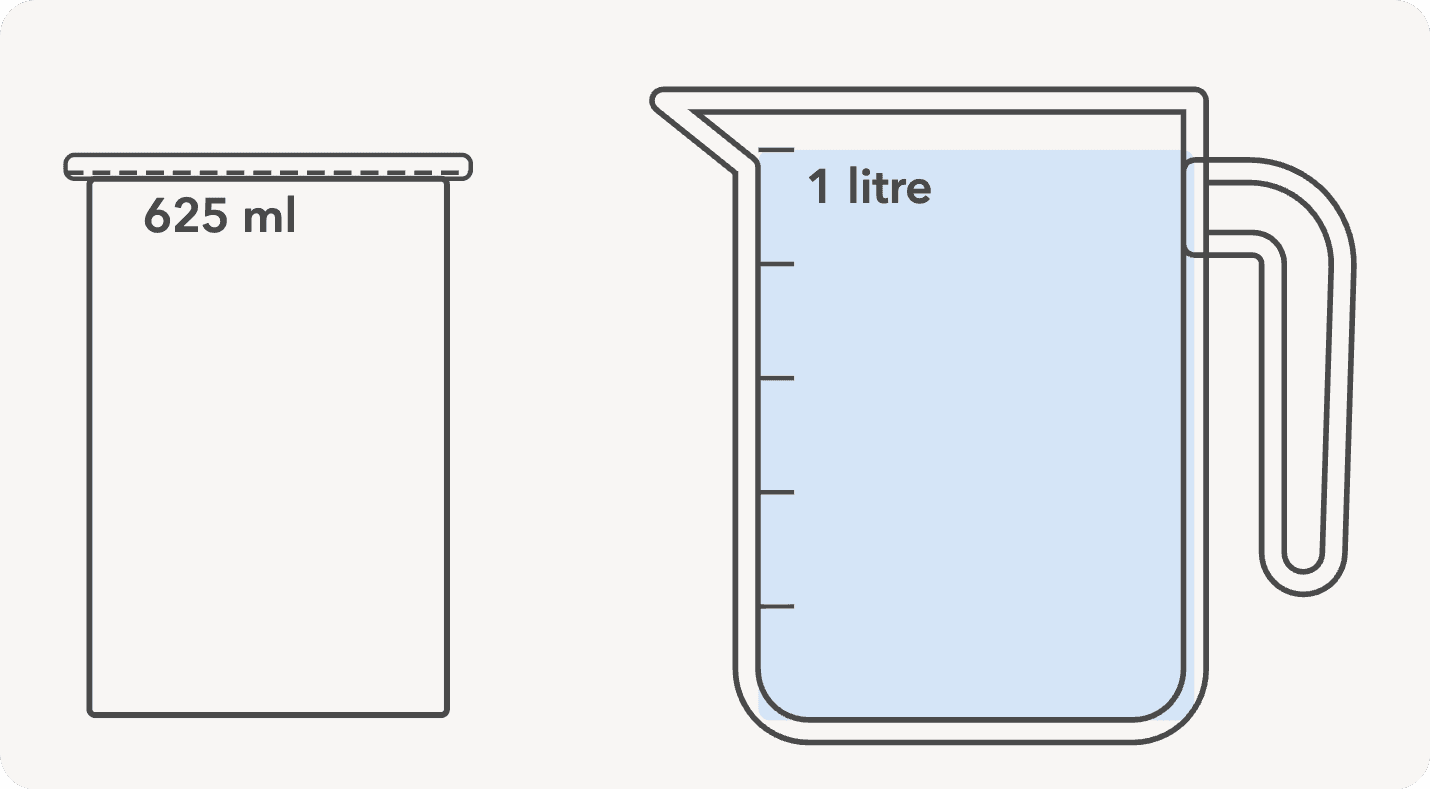
Conversion between metric units is a staple – centimetres to metres, millilitres to litres and so on. Children should also be able to find perimeters of rectilinear shapes, calculate areas of rectangles and estimate volumes.
The jug holds 1 litre of water. The jar is filled from the jug.
How much water will be left in the jug?
A note on imperial units: children are expected to know approximate equivalences (eg there are roughly 30 cm in a foot, 1 kg is approximately 2.2 lbs). These appear less often, but they do appear.
6. Shapes and angles
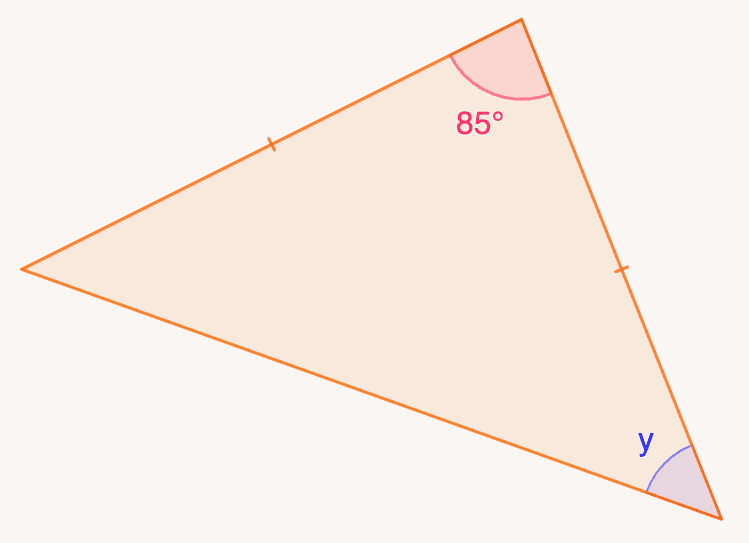
This covers 2D and 3D shapes, angles (acute, obtuse and reflex), and properties of polygons. Children should be able to measure and draw angles in degrees, and understand how angles in triangles and on a straight line add up.
Find the size of angle y in the triangle. The two sides with tick marks are equal, and the angle at the top is 85°.
7. Coordinates and position
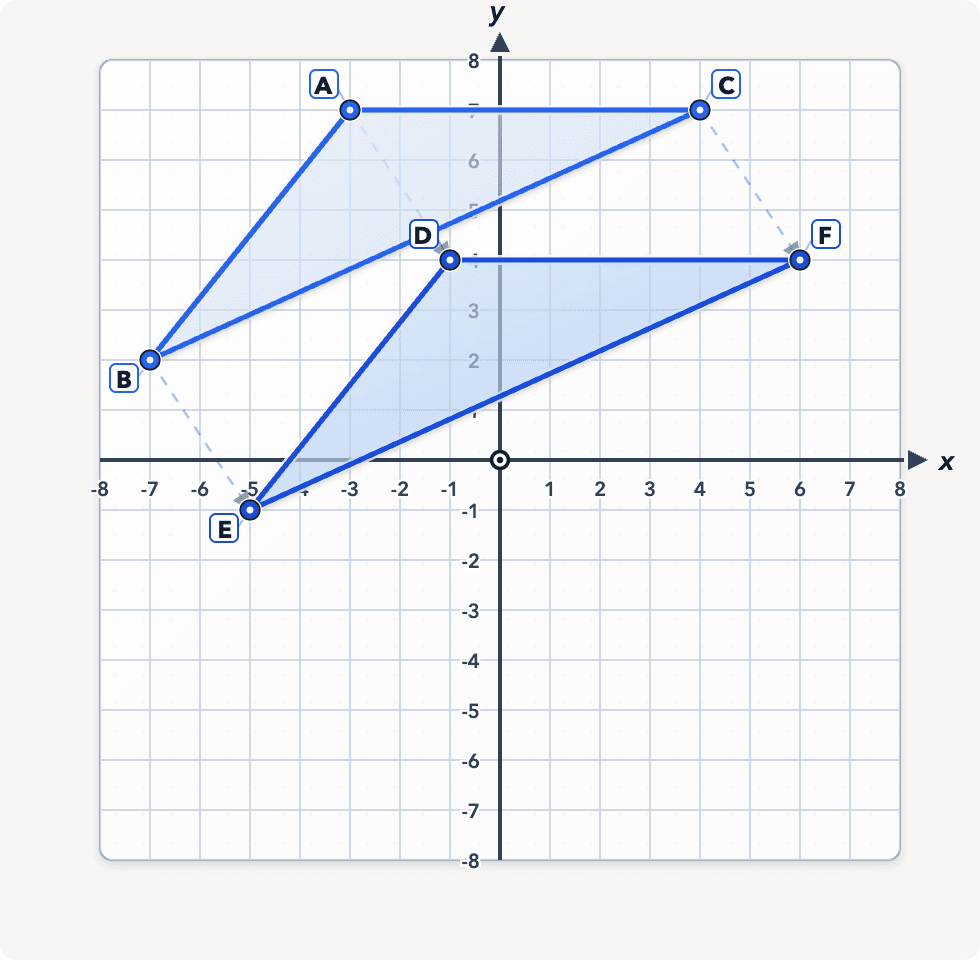
Coordinates, reflections and translations. Children need to be able to describe and plot positions on a four-quadrant grid, reflect shapes in horizontal and vertical lines, and describe translations.
Which of these statements correctly describes the transformation from triangle ABC to triangle DEF?
8. Charts, tables and data
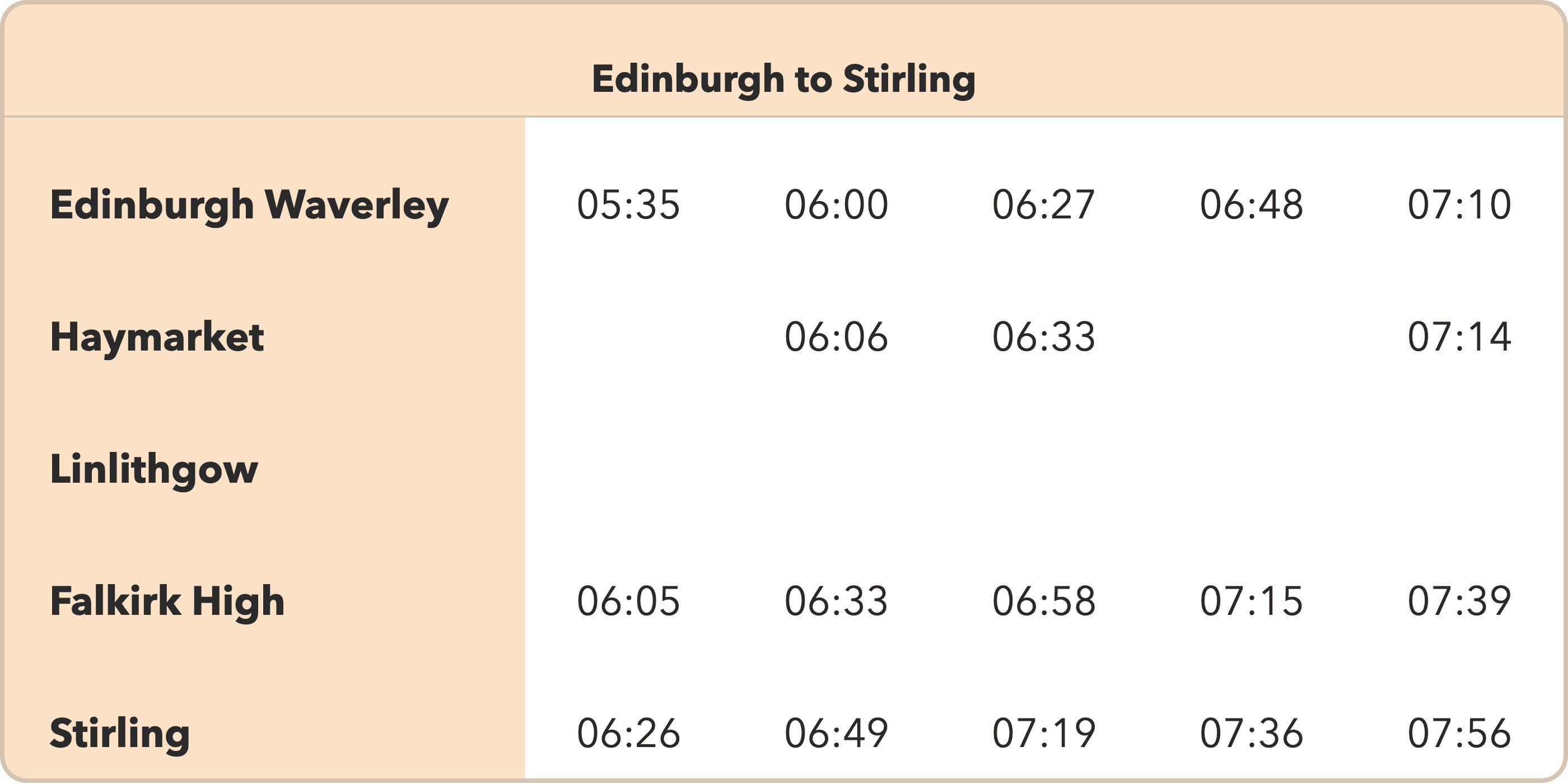
Reading and interpreting data from tables, bar charts, pie charts and line graphs. Children should be able to answer comparison questions and calculate simple averages from data sets.
Look at this train timetable.
Alice wants to arrive in Falkirk High by seven o'clock in the morning.
What time must Alice leave Edinburgh Waverley?
What does the paper look like?
GL
GL maths papers are always non-calculator, taken on paper with a separate answer sheet. Questions are a mix of multiple choice and short written answers. The paper usually starts with more straightforward one-mark questions and gets progressively harder.
The time pressure is real. The exam isn't designed so that every child finishes – it's designed to differentiate. Helping your child develop a sense of pace, and practise skipping and returning to harder questions, is genuinely useful preparation.
Raw marks are converted to a standardised age score (SAS), which takes into account your child's exact age at the time of the exam – helpful for children born later in the school year, who would otherwise be at a disadvantage. The SAS typically runs from around 69 to 141. Pass marks vary by school and by year, depending on the cohort – which is one reason why "what score do I need?" is harder to answer than it sounds.
ISEB Common Pre-Test
The ISEB is taken entirely online and is adaptive – the questions adjust in difficulty based on how your child is doing in real time. There's no back button. Once they've selected an answer and moved on, that answer is locked. This is probably the biggest adjustment for children used to checking their work at the end.
Scoring works differently from GL too. It's based on the difficulty level your child reaches, not just how many questions they answer correctly – so getting harder questions right matters more than getting through a lot of easier ones. Rough working on paper is allowed, and children can sit all four sections in a single session with short breaks, or spread them across separate days.
Quest
Quest is a mix of adaptive and non-adaptive. The maths and reasoning sections adapt to your child's responses – harder if they're doing well, steadier if they're not – and there's no going back within those sections. The English section doesn't adapt, and children can move freely between questions within it. Some schools also use Quest Part 2, which covers puzzles, problem-solving and creative comprehension; it's the same for everyone and children can revisit answers.
Schools choose which parts and subjects to include, so it's worth checking your target school's admissions page for the specifics. Scoring varies by school.
How to prepare
Start with a diagnostic. Before anything else, find out where the gaps are. There's no point spending weeks on fractions if place value is the weak spot. HeyKitsu's free diagnostic does this automatically – it maps your child's strengths and weaknesses across the full curriculum so you know exactly where to focus.
Cover what school hasn't taught yet. This is important. Even in Year 6, children may not have covered all the topics that appear on the paper. Multiplying fractions, certain angle properties, and some statistics content can all arrive in school after the September exam date. Preparation needs to fill those gaps.
Practise under timed conditions. Reading a topic and understanding it isn't the same as answering questions about it in 45 minutes. Past papers and timed mock tests matter.
Don't just mark – review. Getting a question wrong is only useful if the child understands why. Going through incorrect answers, ideally with a clear explanation, is where the real learning happens. HeyKitsu does this automatically for you.
If you're looking for somewhere to start, HeyKitsu covers all four 11+ subjects – Maths, English, Verbal Reasoning and Non-Verbal Reasoning. The first three levels of every topic are permanently free – no credit card required. Your child can try it now and see if it clicks.

Ready for exam day?
HeyKitsu's timed practice mode builds the pacing and focus your child needs to stay calm under real 11+ conditions.
Written by
HeyKitsu Team